Showing posts with label snowfall. Show all posts

Sunday, June 19, 2011

Himalayan Glacier Study reveals snow loss in Teesta basin

Gangtok June 17: A first-of-its-kind study to prepare an inventory of the Himalayan glaciers in the Indian sub-continent has revealed a loss in the glacial cover in the Teesta basin in the past fourteen years and the absence of snow in the sub-basins of the river like the Rangit.

The study named Snow and Glaciers of the Himalayas was conducted by the Union ministry of environment and forests in association with the Ahmedabad-based Space Application Centre of ISRO.

The aim of the project was to find out the trend of the glaciers in the Indian Himalayan region over a period of four years from 2004-05 to 2007-08.

“According to this inventory there are 32,392 glaciers in the Indus, Ganga and Brahmaputra basins that drain into India. It is for the first time that such a detailed inventory with the help of satellite data has been published that contains figures indicating the advance or retreat of glaciers,” sources at the ministry of environment and forests said.

In the course of the study, in which around 2,500 glaciers were monitored including 34 of the Teesta, it has been found that in 1990 the 34 glaciers used to cover an area of 305sqkm. But in 2004 the area of the glacial cover on the Teesta basin was reduced by 4sqkm and 23 of the glaciers showed trends of retreat.

While eight were found advancing, the coverage area of three glaciers remained unaltered.

The Teesta basin is part of the Brahmaputra basin.

According to experts, the basins of the eastern Himalayan region reflected less retreat than those in the western Himalayas.

Experts said the loss of glacial cover and their retreat may lead to dry rivers or floods in the area.

The findings of the study has also indicated the presence of several supra-glacial lakes on the Brahmaputra basin.

These lakes are formed because of the melting of glaciers during the summer months.

The study revealed that there are 474 supra-glacier lakes spread over an area of 70.02sqkm in the Brahmaputra basin. Of them, 61 are in the Teesta basin.

“Existence of supra-glacial lakes could be hazardous and might cause loss to human life and property. These lakes can create crevasse and the entire water would empty in a few hours causing sudden inundation in the downstream,” said Animesh Bose, an environmentalist from north Bengal, said.

While monitoring the Himalayan glaciers in selected sub-basins of Jammu and Kashmir, Himachal Pradesh, Uttarakhand and Sikkim, experts have found that in the Rangit sub-basin the extent of snow cover during certain months of the year, has shown trends of reduction in 2007-08.

“During the study, it was found that earlier the snow cover in the glacier that feeds the Rangit sub-basin existed till April. But in 2007-08, no snow cover was found after February,” a source said.

The Rangit sub-basin, which originates from Sikkim, is part of the Teesta basin.

The study shows the Teesta has supra-glacial lakes spread over an area of 10.37sqkm. It also has two moraine dam lakes fed by glaciers spread over an area of 2.79 sqkm.

Environmentalists and experts said the loss of the glacial cover, even though low when compared to other the basins of the country, has commenced in this region.

During the study 10,106 glaciers have been found on the Brahmaputra basin, 16,049 in Ganga basin and 6,237 in the Indus basin.

“Several glaciers feeding the Teesta are retreating and areas in the upper reaches of the Sikkim Himalayas are drying up with less snow cover,” Bose said.

According to him, to prevent the retreat of glaciers, trees should be planted. More trees will result in rainfall in the lower areas and snowfall in the higher altitudes.

“Unless massive afforestation is done in these areas it is tough to encourage the advancement of glaciers and there can be severe climatic conditions in future added to inundation as indicated by the presence of supra-glacial lakes,” he said.

(The Telegraph)

Thursday, November 19, 2009

Sikkim Snowfall


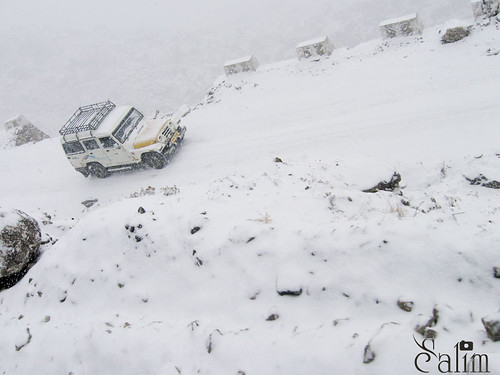
Last Monday saw the first snowfall of the season at Kupup in East Sikkim

Wednesday, November 18, 2009

SIKKIM:Snow is here, but winter far away


Wait till December to feel the shiver, drizzle-induced chill not to stay: Met experts

Gangtok,Nov. 17: Winter this year has to race hard to catch up with Siliguri, Met experts have said. And it may be as late as the first week of December before it comes calling on the foothills of the Himalayas.

While snow drizzled in Nathu-la and its neighbouring areas today, a common phenomenon this time of the year in the higher reaches of Sikkim like the border pass at 14,400ft, there seems to be no sign of winter in north Bengal plains where the woollens are usually out in November.

A light shower or two in the past 24 hours did raise a hope for the much-awaited cold, but weathermen have dismissed any hope of winter.

According to the Met office, today was the “hottest day” of November in the past four years (see chart). Gopinath Raha, the in-charge of the Jalpaiguri flood and meteorological office, said an anti-cyclonic condition over the Bay of Bengal was the reason for the misty weather.


“There were drizzles in almost every part of north Bengal in the past 24 hours which decreased the temperature, but it should not be described as cold that brings winter to the region. Usually, the minimum temperature varies in this part of the state during the middle of November between 15 and 16 degrees Celsius. But today’s temperature is 19.5 degrees, which is the highest in the past four years in the region,” Raha said.

The Met expert said the weather would remain the same in the next few days. “The anti-cyclonic condition that developed over the Bay of Bengal in the past couple of days has advanced towards the northeastern part of the country by covering Orissa and Bihar, resulting in the cloudy weather in the region,” Raha said. “There is a possibility of the weather remaining the same in the next two days.”


The drizzle-induced morning chill prompted many Siliguri residents to bring out their woollens. Most of them were, however, not aware that today was the hottest compared to temperature on this day in the past four years.

But the damp weather is expected to have a bad impact on winter farming, feel agriculture department officials.

“As the paddy is ready for harvesting everywhere, the rainfall at this time will affect the crop. This type of moisture in the environment is ideal for blights,” said Mehfuz Alam, the assistant director of the Siliguri subdivisional agricultural department.

In Sikkim, there was heavy snowfall at Chhangu and Nathu-la from the morning, disrupting the border trade with the Tibetan Autonomous Region (TAR). Sources in the commerce department of Sikkim said no traders arrived at the trade mart at Sherathang from TAR. Traders from Sikkim, who managed to reach the spot, however, could not set up shop and returned to Gangtok. The trade through Nathu-la, located at 14,400 feet, officially closes on November 30.

The first snowfall in Sikkim this season was at Yumthang in North Sikkim at 12,000 feet in the last week of October.

Tuesday, November 17, 2009

Heavy snowfall in Sikkim


Snowfall in Nathu La, Changu Lake
Gangtok, Nov 17 : Heavy snowfall took place since last night in the higher altitude areas of Sikkim with some areas receiving falls as high as 3-4 inches.
The snowfall started at around 2230 hours, said sources at the Sherathang police outpost located at 13,300 ft near Nathu La border.


Heavy snowfall of around 3-4 inches took place in Nathu La border and nearby areas of Kupup, Tsogmo and Sherathang.The snowfall continued today but the roads were clear so far enabling tourists to reach the tourism spots of snowclad Tsogmo Lake and Nathu La border.

However, if the snowfall persists for the next few days, the high altitude tourism spots may be closed down for tourists as the roads may get blocked by snow.
UNI

Thursday, October 08, 2009

Sikkim gets first heavy snowfall of season


TheSikkimTimes is excited to announce the first snowfall of the 2009-2010 season in Sikkim. The heavy snowfall has been reported in the mountainous corridors of the Nathula border while the holy lake of Guru Dongmar is already wearing a blanket of snow. Nathula Pass and its nearby tourist spots have been receiving heavy snowfall since tuesday  night. It started to snow in nathula at around tuesday midnight, much to the delight of those in the hospitality industry.


Tourists proceeding to the Nathula border couldnot reach their destination due to heavy snowfall but they arenot complaining as they were able to touch and beautiful sight of snow all around. It was welcome sign for many as being the first heavy snowfall.and most of the roads blocked by fresh snow but cleared immediately . But army personnels have done a good and quick job, rescued the visitors, some got sickness among them.


All the high passes of Sikkim are now under snow cover. Normally snowfall occurs in the months of the November to February and therefore signs of snowfall in early October is a bit unexpected but welcome sight to tourists as well as those in travel industry.

Friday, October 26, 2007

SIKKIM GETS FIRST SNOWFALL OF THE SEASON


GANGTOK, October 24: Tourists making a beeline to the historic Nathula Pass on their annual vacation was in for a big surprise.
On Friday, October 19, visitors to this must-see destination were greeted with the first snowfall of the year, much to their delight and wonder. The Tsomgo Lake was covered in a blanket of snow, making the Sikkim trip all the more special for vacationers, especially those from the plains who had never seen snowfall in their lives.
“We were told that we would not be seeing any snow this time of the year here. But we were certainly in for a big surprise. As soon as we reached Tsomgo Lake, it started to snow. It was the most beautiful day of my life,” said Ratula Basu, a young executive from Kolkata.
The sunny days of the previous week suddenly changed on Thursday, with a drop in temperature and cold wave conditions, which prevailed in several parts of the State, especially North and East Sikkim.
The first snowfall in the higher reaches of the East District also brought in cold wave conditions with the mercury dipping to near freezing point in many places.
Gangtok experienced an unusually cold Dasain this year, with the cold condition perpetuated by continuous rains and cold winds. To add to the misery, several parts of the Capital experienced long hours of power cuts on October 21, the day of the Tika and Vijaya Dasami. The power cuts continued for another two days, much to the people’s annoyance. The blackouts played spoilsport to the Dasain celebrations.
“This year, we had to spend the Tika day without electricity in freezing temperatures. I really do not know what the problem was but the concerned Department should have ensured uninterrupted power supply at least during the Dasain time,” said Madhu Sharma, a resident of Tadong.
This year, the snow has come in much ahead of time, fuelling speculations over perhaps an extended winter months. Snowfall has also been reported in several high altitude areas in the State. Light snowfall also occurred in Dzongri, West Sikkim and in Lachung, Lachen and Yumthang in North Sikkim.

Saturday, October 20, 2007

Nathula in Sikkim gets early snow surprise


Gangtok,October20: An Ancient Silk Route (also spelt Ntula, Natu La, Nathu la, Natula) is a pass on the Indo-China border connecting the Indian state of Sikkim with South Tibet. The pass, located at an elevation of 4,310 m (14,200 feet) above mean sea level, forms part of an offshoot of the ancient Silk Route. The route leading up to the pass is one of the world's highest navigable roads, and is maintained by the Border Roads Organisation, a wing of the Indian Army. On the Pass the Indian army and the Chinese border guards are within touching distance of each other. To visit the Indian side of Nathula, a visitor's permit must be made one day in advance, which is done by any travel agency
The pass is 56 kilometres east of the capital Gangtok. Although just 5 km north of the Jelepla pass, the Nathula pass is not navigable in winters as it receives heavy snowfall. Temperatures in Nathula regularly dip to -25 °C in winters. The pass is open only to Indian nationals on Wednesdays,
The Friday brought in a pleasant surprise in the form of first seasonal snowfall of year 2007 to Nathula pass of Sikkim even as several parts of north Sikkim witnessed a sudden drop in temperature and cold wave conditions.
The higher reaches of Himalayan region of East district of Sikkim have been witnessing first snowfall and cold wave conditions that have slowly lowered the temperature and signalled the arrival of Wintry weather in Sikkim . It has been snowing near Nathula as well as the mercury hovered below freezing point.

Snowfall was reported also in several high altitude areas in various degrees on Friday bringing a moderate sharp chill in Gangtok and other areas. Light snowfall occurred in Dzongri, West Sikkim and Yumthang of north Sikkim and snowfall has been reported from Nathula valley and Changu lake. The tourists and people associated with tours & travel business felt excited about snowfall and prospects of it giving an enhanced tourism experience in Sikkim to visitors during this puja holidays.