Showing posts with label bear attack. Show all posts

Thursday, November 26, 2009

Another Bear Attack @Sikkim construction site


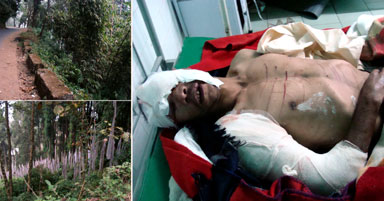
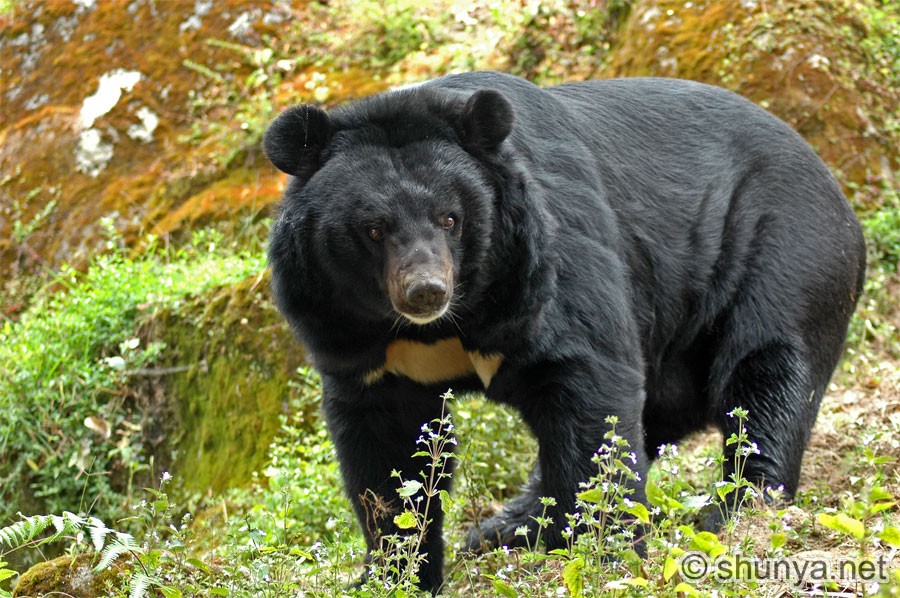
NAMCHI, November 26: A 19-year-old man working at the construction site at Rabong Buddha Park was mauled by the Himalayan Black Bear this afternoon, grievously injuring him.
John Rai, a resident from Mirik who sustained injuries on his left calf and wounds all over his body was referred to STNM Hospital, Gangtok.
This was the first bear attack in the sub-division even as the locals alerted of the sightings of two bears recently.
A team of forest officials consisting of DFO (Wildlife), Passang Dorjee Bhutia, ACF (Wildlife) Madan K Koirala, BO (Territorial), Anup Bhaniya, BO (Wildlife) Suman Basnet, BO (Wildlife) Dorjee Ongmu Bhutia surveyed the area but could not trace the animal.
Prior to the attack, forest officials had been surveying the area following reports of the wild animal eating at least five pigs from Borong-Ralong area, said forest officials. It may be mentioned here that a forest officials had last year tranquilised a black bear at the same locality.
Even at the time of filing this report, the forest officials along with members from eco development committee, joint forest management committee, Panchayats and locals have been coming through the locality. Cages have also been put at certain places around Rabong, forest officials said over the phone.

Saturday, November 21, 2009

Bear Combing operation in Parakha


GANGTOK, November 21: The State forest department yesterday conducted a full combing operation in Parakha area of East Sikkim where bear menace had been reported recently.
A forest team consisting of wildlife and territorial staff led by DFO (Wildlife, East) Karma Legshey and ACF (Territorial, Pakyong) Rajini Bhandari along with Tekabong outpost police combed the entire area of Tekabong Parakha GPU where the bear had been sighted.
The team found signs of bear presence during the combing operation conducted in the area. The bear had also damaged some crops like squash and ginger of three local farmers - Mahananda Kharel, Suresh Gurung and Kush Narayan Sharma.
The forest team conducted an on-the-spot assessment of the damage and assured compensation to the farmers during a sensitization meeting conducted for the villagers and Panchayat members.

Wednesday, November 18, 2009

Fresh sighting of bears at Gangtok


Fresh sighting of bear at Tathangchen prompts forest dept to set up a trap

GANGTOK, November 18: State forest department is maintaining strict vigil in bear wandering suspected areas even as fresh sightings continue to come from various parts of East Sikkim.
Today, bear sightings were reported from three areas of East Sikkim-Rumtek, Ban Jhakri falls and Tathangchen area of Gangtok.
The forest department received information of bear sighting from Tathangchen area, the same area where a juvenile bear had mauled a grass cutter on November 15.
A forest team led by DFO (Wildlife, East) Karma Legshey along with a team of Gangtok Sadar police rushed to the spot and immediately launched preventive measures. A cage has also been set up in the area in order to trap the sighted bear. Two armed forest guards are presently maintaining vigil on the trap.


Bear sightings were also reported from Rumtek area which was responded by the forest department. Jigmee Bhutia (Range Officer, Fhambongla wildlife sanctuary, east range) along with local territorial staff conducted enquiries at the spot but the bear was not seen again. The locals have been sensitized about the preventive bears by the forest team.
The third sighting was reported from Ban Jhakri falls where a territorial team from Gangtok range was dispatched. However, the bear could not be traced.
The forest department is planning to set up early morning hours patrolling in the area between 4 am to 6 am to trace the elusive bear.
Meanwhile, the cub which had separated from the mother bear at Rakdong Tintek yesterday has gone back to the forest areas. However, the forest personnel are still maintaining vigil in the area.

Tuesday, November 17, 2009

Operation Clear Bear in Gangtok


GANGTOK, November 17: A nightlong combing operation was conducted by forest department along with Himalayan Zoological Park (HZP) staff and Gangtok police to clear the wooded areas between Kazi road and Tibet road from the menace of transgressing bears, one of which had mauled a grass cutter yesterday at Upper Tathangchen.
A forest department team consisting of DFO (Wildlife, East) Karma Legshey, and Range Officer (Territorial, Gangtok) James Lepcha, Sadar police team led by SI KL Denzongpa and HZP staff led by deputy director Dr Madhan Shankar jointly combed the areas yesterday night which continued till the early morning hours.
The combing-cum-push back operation was done in a coordinated manner and the area which has human habitats has been freed from the bear menace, it is informed. Three bears, one mother and two cubs, had been sighted in the area.
Meanwhile, a cub apparently abandoned by the mother bear has spotted at Rakdong Tintek area. The cub and the mother bear had been spotted by the locals.
The forest team led by Range Officer (Phabongla wildlife sanctuary)
ST Bhutia reached the spot along with the HZP deputy director DrShankar reached the spot and cordoned the area.

The team took steps to ensure that the cub is left alone and there should be no human contact. Reinforcements were sent from the Forest head office to assist the team who combed the area to find the mother bear.
A newly developed cage was also sent to spot to capture the mother bear but the bear has not been traced yet. The cub has been apparently abandoned by the mother bear, it is informed and it is expected that cub could be rescued and taken to HZP if the mother bear is not traced soon

Three goats killed by bears near Pakyong


PAKYONG, November 17: A pair of Himalayan Black Bear has been suspected to be roaming around Thekabung jungle, above Parakha BAC office, about 12 kilometres away from here.
The villagers suspect that the bears have eaten three goats, which were left in the jungle for grazing recently. These goats, the villagers said had gone missing from where they were left for grazing.
The State Forest officials and staff members of the sub-division have been in the look out of the black bears for the past two days. However, the departmental team is yet to trace the elusive animal.
Speaking to this correspondent, BK Dhamala, Range Officer, Pakyong sub-division said, the fresh waste (toilet) of bear has been sighted at Thekabung jungle this morning through which they guess that an adult animal and a cub might be there.
“Due to dense bushes and trees, we were unable to locate as where the bear was hiding,” the RO said adding that the search is still on. He further said that the bear might have eaten the three goats that went missing for the past three days.
“We have informed to the department but still no one has come to the place for tracing and capturing the bear,” Mr. Dhamala said.
On the other hand, local people fear that the animal may enter the village and cause damage.

Gangtokians appealed not to go for morning-evening walks


GANGTOK, November 17: The periphery areas of Gangtok town, especially the wooded spots, have come under the siege of Himalayan black bears leading to an exasperated wildlife authority to appeal the Gangtokians to abort their morning and evening walks for time being even as a 38 year person is battling for his life after an encounter with a juvenile bear today morning near West Point school, Upper Thanthangchen.
This is the second encounter in Gangtok in a span of 12 days after the horrific incident of November 3 where three forest officials were mauled by foraging bear at Upper Sichey.
In between, bears have been flirting round the edges of urban Gangtok right from the top, Bulbuley running past the defence set up by the forest authorities and local administration.
One such bear, a juvenile bear freshly separated from the mother bear, managed to drift right into a small wooded area near West Point School and few meters away from Tashiling secretariat.
Unfortunately, local person Bimal Gurung was collecting fodder for cattle in the area when he ran into the lurking bear who was rummaging in the bushes for food.
In the ensuing tussle, Gurung sustained deep injuries in his head, right hand and chest portion. He is the tenth person to be attacked by bears in Sikkim in the past one month.
After the brief encounter, the bear slipped away into the bushes while the victim was immediately rushed to SNTM hospital here from where he was referred to Central Referral Hospital in Tadong in serious condition.
State forest secretary ST Lachungpa visited the victim at the hospital and provided a financial assistance for Rs. 5000 for the medical treatment of the injured Gurung.
A team from Himalayan Zoological Park (HZP) led by deputy director Dr Madan Shankar, senior wildlife authorities CCF (Wildlife)
HP Pradhan and DFO (Wildlife, East) Karma Legshey and police personnel from Sadar police station combed the area for hours to trace the bear.
“We combed the area and tried to flush out the bear using firecrackers but the bear could not be traced and most probably the animal must be moved to another location,” said Dr. Shankar. He said that the zoo staff had come prepared with a cage and a tranquilizer team to capture the bear.
Meanwhile, three bears – one adult and two cubs- were sighted at nearby Kopibari, Syari at the same time. The zoo staff and wildlife authorities rushed to spot but the bears had disappeared. The bears are said to be still in the vicinity.
The HZP official said that zoo staff has their hands full since November 9 after a bear migrated into the forest areas of the park. We have been responding to the bear sightings and at the same time, we have to take care of the animals in the park also, he said.
According to Dr. Shankar, use of camera traps would be very useful to track the movement of the wandering bears in suspected areas.
Today’s incident takes the number of bear transgressions into human habitats to more than 20 in different parts of the State.
Out of these transgressions, around eight have turned into encounters with humans leading to injuries to ten persons. Forest authorities and people are perplexed by the rash of bear transgressions in the State since the second week of October and have now cautioned the general public living in and around the wooded areas of the capital.
“The bears usually move around in dawn and dusk hours and we appeal the people to refrain from going out for the morning or evening walks for some days,” said CCF HP Pradhan who expressed his apprehensions that the bear threat will last for some more days.
The parents have been appealed to ensure that their children return back to their homes early.
The forest department has already submitted a report to the State Government seeking funds of Rs. 60 lakhs to beef up its resources and infrastructure to combat the bears.
What is driving these bears out of the forest areas and into the urban areas, questioned the people living in the periphery areas of the main town who are now living under a constant fear of the drifting bears.
While the food issue has been projected as the main reason for the migration of the bears, the proliferation of bear transgressions into human habitat areas have become a matter of serious study for the wildlife authorities and other key agencies.
It is claimed that there has been a decrease in the production wild fruits which were a staple diet for the bears in the high altitude areas. This factor coupled with the increasing numbers of other wild animals like wild boars have compelled the bears to come down to lower areas.
The migration of bears is a natural phenomenon but this year, there has a prolific movement of the bears in and around human habitats, Mr. Pradhan said. He pointed out that such sightings are being regularly reported from all parts of the State.
There has been a sighting at Makha recently and at Parakha in East Sikkim today, said the CCF.
“We are continuing our combing operations in the suspected areas,” Mr. Pradhan said, adding that department and the forest personnel have been fully mobilized to limit the damages and push back the wandering bears.

Monday, November 16, 2009

Bear mauls again in Gangtok


Gangtok, Nov. 15: A Himalayan black bear pounced on and mauled a grass cutter near the state secretariat here this morning, barely two weeks after three senior forest officials were injured in a similar attack in a residential area of the town.

Around 10.30am, 38-year-old Bimal Gurung was working on a green patch between Palace Ridge Park and the Tashiling state secretariat when the bear came up from behind him. It pounced on him, its force pushing him to the ground. It is not clear how Gurung, who is hardly able to speak, fended off the bear or why the animal left him.

On a weekday, the area on the outskirts and on a higher level than Gangtok, is fairly crowded with people queuing up to the secretariat which houses the various departments of the government.

Chutim Dorjee Lepcha, the person in whose house Gurung worked, said he heard shouts for help and rushed out. “I saw Bimal bleeding and barely able to walk up the slope towards the road. He managed to tell me that a bear had pounced on him while he was cutting grass. The animal was nowhere to be seen,” he said.

Gurung was rushed to Sir Thutob Namgyal Memorial Hospital where doctors, who attended on him, said his right arm was fractured and he suffered severe injuries on the head, chest and face.

Later, he was shifted to Central Referral Hospital at Tadong.

Forest secretary S.T. Lachungpa visited the injured man at STNM Hospital and handed him Rs 5,000 as initial payment for his treatment.

“I held a meeting with senior forest officials after the incident and it was decided that seven to eight spots in the state capital which is contiguous to forested land would be manned constantly to prevent incidents like this one. We appeal to the people to be very cautious in the morning and at nightfall when bears are mostly active, looking for food,” Lachungpa said. He added that Himalayan black bears were known to attack humans without provocation.

The bear was still at large till late this evening. A team from Himalayan Zoological Park led by deputy director Madan Shankar, senior wildlife officials and local police combed the area. The forest department also received reports today that an adult bear, most probably a female, and two cubs were sighted in Shyari, another locality in the capital.

“We combed the area around the secretariat and tried to flush out the bear using firecrackers but it could not be traced and most probably the animal must have moved to another location,” Shankar said.

Today’s incident takes the number of bear transgressions into human habitation in the state to more than 20 in the past one month, forest sources said.

The department has chalked out a plan that would entail a cost of Rs 60 lakh for better arms, darts, ambulances and other material to tackle the bear menace. However, the report is yet to be submitted.

The last sighting of the animal was on Thursday when three bears, which swam across the Teesta river at the reservoir site at Dikchu in East Sikkim, killed a goat. Forest officials said the increase in the population of bears and other wild animals in the forest areas have led to food competition forcing the animals to migrate into human settlements.

Sunday, November 15, 2009

Gangtok Man Injured in in bear attack again


Gangtok,Nov15: A Gangtok man was seriously injured when a wild bear attacked him in Thathangchen area near Guards ground, police said.

The bear attacked the man near Guards ground when he was cutting grass last evening and suffered from bites and scratches all over his face and body following the attack.
Police said the injured were shifted to STNM hospital where he is being treated for his injuries.

Soon after the incident, people took to the streets and the wildlife department conducted a combing operation without any trace of bear .meanwhile,The Forest department has appealed people to avoid morning and evening walk in the area and also not to allow children to stay outside to avoid the frequent attacks by wild bears.

Saturday, November 14, 2009

GANGTOK GETS BEAR SCARE


Gangtok, Nov. 14: Residents of the hill town are scared to venture out of their houses after frequent sightings of Himalayan black bears in the area and reports of their attacks on people.

According to the officers of the forest department there have been 18 bear sightings in the last month and six persons have been mauled.

K.S. Bhutia, who stays in Development Area near here, has stopped going out of his house in the early hours. “I used to get up before sunrise to go jogging. Now, I am scared to venture out, thanks to these bears straying into the town. I do free-hand exercises in the safety of my home instead,” said the 37-year-old man.

Adarsh Rai, a taxi driver, said: “There is no substitute for caution. After so many sightings I am scared to stop the car at the roadside, near forest areas.”


Rabin Pradhan, 57, a resident of Sichey, where a bear had mauled three senior forest officials on November 3, said, he is scared to go out of his house and keeps a watch on his children and warns them before they go out.

The forest department has sought Rs 60 lakh from the state government for buying improved dart guns, drugs, ambulances and nets to tackle emergency situations arising out of bear attacks.

The divisional forest officer (wildlife east), Karma Legshey, said four teams, each headed by an assistant conservator of forests, have been deputed in East Sikkim. Range officers have been deputed in the blocks to tackle bears straying into human habitation.

“We appeal to the residents of the area not to take independent action, approach or provoke the animals and not to pay heed to rumours and inform the forest staff or police as soon as a bear is spotted,” said Legshey.

Senior forest officials said conservation efforts and crack down on poaching activities in the forests have led to the rise in the bear population leading to competition for food.


“The bears are being attracted by garbage in urban areas that contain about 70 per cent of edible trash,” said an officer. He added that the use of explosives in hydel power projects and road construction work was also a source of disturbance to the animals.

Meanwhile, a bear that was sighted near the Himalayan Zoological Park, 7km from here, on November 9, is still at large. “It has been sighted after that day, too and guards have been posted in the area to keep a sharp lookout for the animal,” said a zoo official

Food Scarcity drives bears into human habitations of Sikkim


Gangtok,Nov14: Forest Department held a press conference Thursday at the Forest Secretriat on the burning issue of citing bear and their encounter with human beings in all the four districts of the state.
Mr. NT Bhutia, Conservator, Wild life, Mr. HP Pradhan, Chief Conservation Officer (CCF), Wild Life, Mr. Nambi Tshering Bhutia, Divisional Forest Officer (DFO), Kanchazdonga National Park (KNP) North and Usha Lachungpa, Research Officer spoke to media. They said, so far department has information about 13 bears, of which 9 have been sited and 5 encounters with human beings have been recorded within two months of October and November. “Today (Tursday), one ox became prey of a bear at Nambong near Ralong and a goat was also killed at Dickchu Dam side”, they informed.

Regarding encroachment of bears into human habitation they said, during this month there is lack of food in higher altitudes. Animals come down to villages for search for food.Rrapid increase in bear population has led to scarcity of food. Goshalas are banned in the state from 1998 and restriction in killing of juveniles has also led to increase in the population of wild animals. The wildlife department has planned to have village level meeting to make villagers aware of the threat, the officials informed.

Friday, November 13, 2009

Three bears foray into Dikchu in North Sikkim


Forest Dept to beef up its resources and manpower capacity


GANGTOK, November 13: Matching the labourious efforts of the State forest department to stem the wave of bear transgressions into urban Sikkim, three tenacious bears crossed the river Teesta and killed a goat during their flirtation around Dikchu area while another bear romping around fringes of Himalayan Zoological Park here is still proving difficult to be pinned down.
The forest department informed that three bears had crossed the Teesta river to come close to Dikchu where the animals killed a goat. This latest foray takes the number of bear sightings in the State in the past one month to at least 18.
With bears taking much of newsprint, the forest department called a press conference here today evening to brief the media about the latest updates on the measures taken and proposed to contain the issue.
Chief Wildlife Warden NT Bhutia, Chief Conservator of Forests (Wildlife) HP Pradhan, Chief Conservator of Forests (Territorial & Land Use) C Lachungpa, Senior Research Officer Usha Lachungpa, DFO (KNP/KBR) Nambi Tshering Bhutia and DFO (Wildlife, East) Karma Legshey addressed the media.
Informing that around 18 sightings have taken in all parts of the Sikkim since October 24, the forest officials informed that a strategy has been formulated to address the incidences of bear sightings and encounters with humans.
Dozen of these sightings have taken in West Sikkim alone.
We have set up four teams each headed by Assistant Conservator of Forests (ACF) in East Sikkim, said the CWW. Range Officers have also been deputed in the BACs to assist the local forest officials in such incidents. The RO has been tasked to ascertain the reports and inform the ACF who will in turn coordinate with police officials for proper handling of the incident.
The senior forest officials stressed that they will be coordinating with the concerned police officers for immediate cordoning of the area where the bear is reported to have been sighted.
The CWW informed that the bear sightings have also been included in an ongoing survey that is presently going on in Pangolakha sanctuary from Rhenock to Tumin. Villagers are being asked about the wild animal sightings and encounters and the survey findings will be the baseline for future sightings, he said.
CCF Pradhan informed that two cages with trap doors which can be easily transported have been developed in case a bear has to be captured. He said that the department is preparing a comprehensive report for beefing up the infrastructure and resources of the department.
The report will be submitted to the State government soon, said the CCF. He said that the department would be requesting for financial assistance worth around Rs. 60 lakhs to procure equipments and protection materials like ambulance, helmets and firearms.
We will also select a team of young Block Officers and give them training to handle such incidents, said Pradhan. The department would also be approaching Wildlife Institute of India and other institutions for training of the frontline staff.
The department also strongly rejected the allegations over the tranquilizer misfire during the Upper Sichey incident on November 3 when an apparently sedated bear mauled three foresters. The department said that lack of visibility and noise created by the crowd could not allow the tranquilizers to have the desired effect on the bear.
Meanwhile various reasons were offered for the rash of bear sightings and encounters in Sikkim.
The senior forest officials opined that increase in the population of bears and other wild animals in the forest areas have led to food competition forcing the bears to migrate into human settlements in search of food which is found in garbage. The population of wild animals has increased due to strong conservation policies of the State government; they said adding that poaching has stopped while their habitats have improved due to the ban on grazing.
Seventy percent of garbage in Sikkim consists of waste food items and the wild animals are induced into feeding from the garbage dumping grounds, said the forest officials. They also claimed that sections of army troops stationed in higher altitude areas are dumping their waste food as food for the bears. The bears are feeding on these dump sites, they said.
“We are indirectly feeding the bears and inviting trouble”.
The department would be soon submitting its concerns to the GOC, 17th Mountain Division along with a CD containing footage of bear feeding the waste food items of the army near the army camps in East Sikkim.
The villagers are being sensitized on the ‘dos and don’ts’ whenever a bear or any other wild animal is spotted close to the villages.
The forest department has appealed to the people not to retaliate or take any independent action or approach the wild animal in the event the bear is sighted in and around human habitations. The people have been appealed not to fuel or heed any rumours which may create panic in the area.
The department has already released the appeals in the local dailies requesting the people not to dispose garbage especially rice beer wastage in and around human habitations. The department has attributed collection of edible wild items from the forest areas for the increase in man-animal conflicts.
Meanwhile, the bear which had been sighted around the Himalayan Zoological Park (HPZ) area on November 9 is still at large despite continued efforts to trace and push back the wild animal into deeper forest areas away from the human habitats.
However, the bear is still elusive and is suspected to have migrated to another area and the danger that the wild animal may wander into a human habitat still lurks.
Dr Madan Shankar, deputy director, HPZ informed that the zoo staff have been searching the bear but could not trace the animal. A trap has already been set up to capture the bear.
The bear was yesterday night sighted at Kazi Dara near Enchey school by a driver and we reached the spot and launched a search but the bear could not be traced, said Dr Shankar. The bear keeps on wandering and we are trying our best to prevent the animal from entering into human habitats, he said.

Thursday, November 12, 2009

Bear still at large in Bulbuley in Gangtok


GANGTOK, November 12: Efforts are on to trace and capture the elusive Himalayan Black bear which is presently wandering around the forest covers of Himalayan Zoological Park (HPZ) in Bulbuley since Monday morning.
A trap had been set up by wildlife authorities and HPZ officials led by zoo deputy director Dr Madan Shanker yesterday as the most appropriate measure to address the threat posed by the drifter. The trap in a cage has been set up in the spot most frequented by the bear.
The path leading to the cage has been peppered with food items to lure the bear into the trap.
Once the bear is trapped inside the cage, the bear will be tranquilized and then released into forest areas at higher altitudes far away from human habitats.
Dr. Shanker informed Sikkim Express who is supervising the mission said that the zoo staff is patrolling the road between Tashi view point and 2nd Mile so as to ensure that the bear does not enter the human habitats of Chandmari.
The zoo has been closed for the time being and the staff has camped in the area along with Dr. Shanker to capture the bear.
“The bear is still in the area. Our staff sighted the bear yesterday but the animal is still elusive”, said Dr. Shanker. Combing operation was also launched yesterday and today to trace out the bear.

Himalayan Black Bear killed in fierce infighting in West


GEYZING, November 12: A Himalayan black bear was killed during a fierce infighting among three bears at Dokeythang reserve forest near Geyzing in West Sikkim yesterday night.
The carcass was spotted by the villagers today morning who informed the forest authorities.
It is informed that the three bears had been roaming around the forest areas in and around Geyzing, the district headquarters of West Sikkim. The forest authorities said that the bears attacked each other yesterday night leading to the death one bear.
The locals of Dokathang said that they heard the roars of the bears yesterday night. They ventured out in the morning to ascertain the incident when they spotted two bears guarding the carcass.
Some parts of the carcass like had been eaten up most probably the other two bears themselves, it is informed. The incident took place where a person had been mauled recently.
The fighting could have taken over territory or over a female bear.
The forest personnel of Geyzing recovered the body and took it to a vet for autopsy where it was confirmed that some parts of the carcass had been eaten up.
Later the carcass was cremated at the forest colony, Geyzing in presence of the local people and sub-divisional authorities.
Bears have been sighted at least a dozen times in West Sikkim in the past one month. Similar sightings have taken place in other three districts of Sikkim.
Nine persons have already been mauled by the bear in West, North and East districts of Sikkim during these sightings the bears have started transgressing into human habitats.

Wednesday, November 11, 2009

16 Bear sightings, nine injured in bear spate in Sikkim so far


Trap set up at Bulbuley to capture elusive Himalayan Black Bear
GANGTOK, November 11: Debate on forest resource conservation have been renewed with increasing conflicts between man and animals in Sikkim with nine persons injured by Himalayan black bears in various parts of the State.
At least sixteen sightings of bears have taken place in the past one month in all the four districts of the State and six of such sightings have turned into an ugly confrontation that led to mauling of nine persons including three foresters by the bears.
The most horrific mauling took place at Upper Sichey here on November 3 where three senior forest officials were seriously injured by a 90 kg adult bear.
A dozen instances of bear sightings and confrontations have been reported from West district alone, it is informed.
The first incident was reported from Tofung reserved forest, Upper Rimbi in West Sikkim where 50 year old Kuber Singh Subba was attacked by a bear. He was admitted to Geyzing hospital for treatment under the care of the doctors and wildlife staff.
The next incident took place on October 21 where Tek Nath Sharma (42) came under a bear attack at Sangku Dentam under Barsey Rhododendron Sanctuary. He suffered head and body injuries and is presently treatment at Geyzing.
Eight days later, it was the turn of 54 year old Lal Man Rai to come under the bear attack at Meli Khechoepalri. He also landed up at SNTM hospital.
Rai was soon joined by Nima Sherpa (52) at the STNM hospital following a bear attack at a private holding in Dokathang, Tikjhuk near Geyzing on November 3.
A bear was also sighted at near Geyzing, Yuksom and Dupidara, Tashiding in a private holding where livestock were attacked. Three bears were also sighted at Tharpu on November 6 and the animals were driven back into the forest areas by the forest personnel.
One report of bear sighting had come from Lower Namling busty, Ralang on October 24. The bear is reported to have killed a livestock.
The forest department has provided financial assistance and necessary support to the injured persons, said CCF (wildlife) HP Pradhan to Sikkim Express. He said that a control room has been set up to launch immediate measures whenever reports of bear sightings come.
“All wildlife and territorial officials along with front line staff are geared up to handle any situation”, said Pradhan. He also acknowledged the support provided by police, local people and Panchayats.
The bear trend drifted towards East Sikkim with a vengeance mauling three forest officials at Sateybazaar, Upper Sichey on November 3 before the animal was captured with tranquilizers and released in Kupup forest area the next day.
A lady also came under a bear attack at Raffong khola, Malling area on November 8. She is presently admitted at Mangan district hospital with injuries.
Another wild bear is presently romping around bushes of Himalayan Zoological Park, Bulbuley here since Monday morning. The forest and police authorities are taking great precaution and measures to ensure that the bear does not spill over into the human habitats at Chandmari.
As reported, the forest and police staff yesterday evening tried to push back the elusive wild animal towards to the deeper forest covers. The zoo has also been shut down till the bear threat is addressed.
ACF Ashoke Pradhan who has been since yesterday morning camped at the spot to handle the situation along with Gangtok Sadar police said that the bear is still elusive. “But we have found all the signs that the bear is in this area,” he said.
The wildlife authorities have decided not to use tranquilizers to capture the bear. “We have instead set up a trap in a cage at the spot frequently visited by the bear,” said Pradhan. “The trail leading to the cage has been littered with food items in order to lure the bear into the trap.”
“All our staff and police personnel have stood their positions since yesterday in order to prevent the transgression of the bear into human habitats,” said the ACF. He expressed his hopes that bear will be captured soon and then dispatched to higher altitude areas.
A bear is said to have also been sighted at Lower Tintek, Marchak yesterday morning but could not be located afterwards by a team of forest and police staff from Mangan. However, the people have been appealed to remain alert when they venture into forest areas to collect cattle fodder.
Meanwhile, the forest department has reiterated its appeal to the people not to retaliate or take any independent action or approach the wild animal in the event the bear is sighted in and around human habitations. The people have been appealed not to fuel or heed any rumours which may create panic in the area.
The department has already released the appeals in the local dailies requesting the people not to dispose garbage especially rice beer wastage in and around human habitations. The department has attributed collection of edible wild items from the forest areas for the increase in man-animal conflicts.

Operation Bear to Safeguard Gangtokians


Operation launched to prevent bear from transgressing into Chandmari

Gangtok, November11: Even as people across the State are reeling under a series of bear attacks especially with the November 3 incident at Upper Sichey, another large Himalayan Black bear was sighted at Bulbuley forest cover very close to Chandmari population yesterday night.
The bear was sighted at night near the Himalayan Zoological Park periphery and was again spotted by a lady in the morning. The bear was rambling along the bushes near the zoo fence at the zoo gate with only the road separating the animal from wandering into the human settlement at Chandmari.
The bear is said to be larger than that which appeared at Upper Sichey. The bear at Upper Sichey was an adult one, weighed approximately 90 kgs and was of a height of 3.5 ft.
A team of forest officials and forest guards reached Bulbuley along with a team of Gangtok police. The area was cordoned by forest and police personnel. Forest guards were stationed in key points of the zoo and the approach roads while the local people were appealed to remain calm.
SP (East) Dr MS Tuli and Gangtok Sadar police station in-charge PI Tshering Sherpa also reached the spot to assist the forest team.
ACF Ashoke Pradhan and RO D Pradhan told media that pug marks of the bear were found in the area during the search operation.
A strategy was charted to tackle the situation and emphasis was laid on chasing the bear to the higher regions from the zoo area and not to allow the animal to cross the road and stray into the human settlements.
The bear being a nocturnal animal moves around in the night hours which the forest officials decided was the most appropriate time to chase the bear upwards. The operation was launched by the forest and police personnel in the late evening hours of Monday.
ACF Pradhan said that forest and police staff has been deployed in key areas to prevent the bear from crossing down the road while another team of forest and police personnel will be trying to chase the bear to higher locales away from the human habitats.
A clearer picture will be available only tomorrow, said Pradhan.
The Bulbuley bear is the fourth bear that had transgressed into human settlements and come in very close contact with humans, sometimes with tragic results.
At least five people have already been mauled by the stray bears in East, North and West districts of Sikkim.
Various statements have been coming up for such incidents. It is opined that with the winter setting in, bears are beefing up its food intake as the animals will soon hibernate. The bears have wandered into the human settlements in search of food, it is explained.
It is also argued that the food items of bears in the wild have dried up due to low production and also due to humans taking away wild fruits and berries for consumption and selling.
The State forest department has pointed out increase in wild animal population in the forest and wildlife protected areas, congenial conditions for breeding and shelter for wild animals, collection of edible fruit, flowers, young and tenders bamboo shoots and other non-timber forest produce from the forest by humans and change in agriculture practices in rural areas like conversion of agriculture fields into cardamom plantations as the attributing factors for increase in man-animal conflicts.
The department has appealed the people not to retaliate or take any independent action or approach the wild animal if the animal is sighted in and around human habitations. Do not fuel or heed any rumours which may create panic among the people, said the department.
The people have also been appealed not to dispose garbage especially rice beer wastage in and around human habitats.
Meanwhile, it has also appeared that the forest department is insufficiently prepared if a wild animal like bear has to be captured from non-forest areas. The department is said to have only limited resources for such scenarios.
The department has only one vet team trained to wild dart animals that have transgressed into urban areas. The team is further handicapped with insufficient equipment and only two guns to fire the tranquilizer darts.
With bears running amock in three districts, the team has been running around these areas compromising the safety of other forest personnel in areas where they cannot reach in time.
For instance, the vet and tranquilizer team could be here in Bulbuley as it had rushed to Mangan where a woman had been mauled by a bear yesterday. Before this, the team was in West Sikkim where another bear mauling had occurred.

Tuesday, November 10, 2009

SIKKIM : Staying Safe In Bear Country


Many people like to enjoy nature closely, by hiking in backcountry and mountainsides. But when you are in bear country like Sikkim, you should be careful and prepared.
Bear Safety Tips:


  • Make lots of noise. Especially important when you are on a trail with restricted visibility, as well as those times when the wind is blowing towards you, meaning that bears will not have the benefit of your scent. What is most important is for the bear to hear your approach long before you are within its personal space.
  • Travel in groups. Groups of people tend to make more noise, therefore reducing the chances of a bear encounter. Largeer groups offer the added benefit of appearing much more threatening and thus less likely to attract a bear attack.
  • Stay alert! Even though you may be making noise, it is still important to stay alert and on the lookout for bears. Most bear attacks occur when the person was not aware of the bear's presence until the bear was less than 50 m (164 ft) away.
  • Always carry bear spray, and make sure that it is quickly accessible. It will be useless if it is buried in your pack. Practice quickly getting it out and preparing to spray. Bear sprays are an effective deterrent in very close range, emergency situations. When you find yourself in a situation where bear spray becomes necessary, you better be able to pull it out and activate it with little or no notice. It should be on your belt, and you should practice drawing it quickly.
  • If you see a bear, stay calm and give it plenty of room. Do not startle it; detour slowly, keeping upwind if you can, so it will get your scent and know you are there. If you can't detour wait until it moves away from your route before proceeding.
  • When a bear first detects you, it may stand upright and use all of its senses to determine what and where you are. Once it identifies you it may ignore you, move slowly away, run, or it may charge. A wild bear rarely attacks unless it feels threatened or provoked.
  • On four legs, a bear may show agitation by swaying its head from side to side, making huffing noises and clacking its teeth.
  • A charge or retreat may follow. Flattened ears and raised hair on the back of the neck indicate aggressive intent. If a bear runs with a stiff, bouncing gait, it may be a false charge.


When the bear is aware of you and close:


A bear will feel threatened in a close enocunter. The bear's natural tendency will be to reduce or to remove the threat. Assist the bear by acting as non-threatening as possible.


  • Do not make direct eye–contact with the bear.
  • Do not make any sudden moves.
  • Do not run! Very important! You can never outrun a bear ...
  • The bear needs to identify you as a person, so talk in low tones and slowly wave your arms.
  • Try to give the bear an opportunity to leave. Be sure the bear has an open escape route.
  • Try to back away slowly.
When the bear is close and threatening:

  • If you have a deterrent, such as a bear spray, be prepared to use it depending on how close the bear is. Try to scare the bear off.
  • If you do not have a deterrent, or if using the deterrent is not successful, act as non-threatening as possible.
  • Talk to the bear in a calm, but authoritative tone of voice.
  • Do not startle or provoke the bear by making sudden moves.
  • Never imitate the bear's aggressive sounds, signals or posture. The bear is trying to establish dominance and imitating its moves is a challenge to its dominance.
  • Back slowly away from the bear and drop a pack or any other item in order to distract the bear momentarily.
  • The bear may be defending cubs that you have not yet seen or they have a food cache nearby. So try to look as non-threatening as possible.

Bear strikes again in Sikkim


Gangtok, Nov. 9: A 51-year-old woman was mauled by a Himalayan black bear in North Sikkim yesterday morning.

This is the third time in a month that bears entered human habitation and mauled people. The latest incident has forced the forest department to issue an alert to people venturing near the forests.

According to North Sikkim district officials, Suk Maya Subba of Khamsing village, 80km from here, was mauled by the animal around 8.30am yesterday while she was returning from her neighbour’s house.

Subba, who has suffered injuries on her left shoulder, face and chest, is presently undergoing treatment at the district hospital at Mangan, 70km from the state capital.

The divisional forest officer (territorial) North Sikkim, N. T. Bhutia, said her condition was stable.

Three boys, who had gone to collect food for their cattle near the forest in Khamsing village, also saw the animal. They immediately ran to safety.

Forest officials suspect that the bear is still in a cardamom field near the Rabom Jhora in Mangan.

The wildlife officials have alerted the local residents of the area.

Bhutia said a team of forest officials and police have started a combing operation in the fringe areas around Khamsing village from this morning but the animal had not been traced till late afternoon.

“It could have returned to the forests also. But the combing operation is still on,” said Bhutia.

On November 3, a Himalayan black bear had injured three forest officers on the outskirts of the state capital, while they tried to dart the animal.

Later, the bear was tranquillised and taken to Bulbuley zoo before being released in the wild.

On the same day, a 60-year-old man was mauled by a bear in a forest near Pelling in West Sikkim while he was returning to his home near Tikjuk from Dokathang.

“These repeated attacks in recent times could be because of the rise in the bear population or due to the increase in the forest areas. The animals could also be entering human habitation in search of food,” a forest official said.

Thursday, November 05, 2009

After night at zoo, Gangtok bear goes back to wild


Gangtok, Nov. 5: The Himalayan black bear that mauled two forest officers yesterday was released in the wild after spending a night at a zoo.

The animal had ambled into Setey Bazar near Gangtok early yesterday and was caught after a hide-and-seek played out for over six hours. During the confrontation, two forest officers were clawed while the third was injured when he fell while fleeing and the bear was taken to Himalayan Zoological Park in Bulbuley, 5km from here, after it was darted.

This morning, it was sent to the reserve forest at Kupup close to the Memencho lake, about 70km from here, to be released. Kupup in East Sikkim is close to the Chinese border and Nathu-la. Sources at the Bulbuley zoo said the bear had fully recovered from the effects of the tranquilliser and had been fed meat.


Chief wildlife warden N.T. Bhutia said the animal had started for the wild in a truck at 8am. “The decision (to release it) was taken since there was not enough area in the zoo to house the bear and we feared that there would be infighting in the single enclosure where a male and a female bear are presently kept,” Bhutia said. He was present yesterday when the bear was darted very close to the administrative complex of East Sikkim.


Nearly eight darts were fired. The joint director of the state forest department, J.B. Subba, divisional forest officer (territorial) East Sikkim, B.B. Gurung and the medical assistant of the Bulbuley zoo, Sonam Tshering Lepcha, were injured when they approached the bear, which they thought had fallen asleep. But proving them wrong, the animal came after them and Subba was the first person to be attacked. A witness had said Subba could have been killed had not a police sub-inspector hurled stones at the bear to distract it. But the flailing claws caught Subba on the face and Gurung on the left leg and thigh. Lepcha dislocated his arm when he fell while fleeing.

Subba and Gurung were flown by a helicopter to a nursing home in Siliguri at 3.30pm yesterday.

Senior forest officials said the bear might have come in search of food from the nearby Rateychu reserve forest. The Himalayan black bear is listed under Schedule I of the Wildlife Protection Act and is among the most endangered species.

Wednesday, November 04, 2009

Himalayan Black Bear captured @Gangtok after mauling three forest personnel


photo :SikkimExpress
GANGTOK, November 3: An unruly mob, ineffective tranquilizers and unimaginative containment measures severely handicapped the brave forest and police officials in a near disastrous mission to capture a wandering Himalayan Black Bear at Upper Sichey near East District Administrative complex today that took a senior forest official and a DFO to the brink of death before a heroic cop firmly stood his ground to save the day.
Forest joint director JB Subba, DFO (East) BB Gurung and Himalayan Zoological Park medic assistant Sonam Tshering Lepcha sustained deep injuries during the mauling by the rampaging fully grown bear at the bamboo thicket above the road near the administrative complex.

And it all happened because of around seven tranquilizers which had been rifled into the bear in regular intervals refused to sober down the bear with generous contribution of noise from the crowd which had gathered in large numbers to watch the tamasha seriously jeopardizing the containment measures that had been carefully put into place by forest and police officials with great risk to limb and life.
It is a miracle that there were no casualties not from the claws of the bear but from the stampede of the crowd on three occasions.
The whole incident began early morning when Mrs Pema Zangpo Gurung spotted the animal at around 7 am in her small field at Sateybari, Upper Sichey. It was her husband who recognized the animal as a bear and he immediately alerted the local police and forest staff.
The bear had strayed into the suburb during the night hours in search of food and apparently camped at the field.
Once informed, the local police and forest staff reached the spot led by Chief Wildlife Warden NT Bhutia and CCF (Wildlife) HP Pradhan. The area was cordoned off and a trap was laid even as the bear lay hidden in the field.
At around 10:30, the first tranquilizer was pumped into the bear through a draft fired from a rifle. By then, the whole area was surrounded by curious onlookers whose numbers grew in strength despite repeated requests them to vacate the area.
At 11: 12 am, two tranquilizers were shot into the bear from the rooftop of a nearby building.
Instead of having a debilitating effect, the shots seemed to have injected a fresh bout of energy into the bear that jumped out of the field with a roar, bypassed the trap and somehow managed to reach to the upper road and wilted away into the bamboo thicket even as the crowds went helter-skelter with terror.
By this time, additional forces from the Sadar police station led by PI Tshering Sherpa and more forest officials arrived at the scene where the bear was cornered.
SP (East) Dr MS Tuli was also present at the spot to supervise the capture mission.
Despite poor visibility, two more tranquilizers from the rifle and one from a pistol seemed to have shown its desired effect on the bear. Close observations gave a false sense of security to the people and the authorities leading to the signal given for the cage to be hauled up to the spot.
Then at 12:30, disaster struck as the bear roared back to life and in lightening speed jumped on those nearby.
Joint director JB Subba was the first victim as the bear mauled him and took him down rolling. DFO (Territorial, East) BB Gurung tried to come to the rescue and a chunk of meat from his left thigh was clawed out when the bear lashed on him.
Himalayan Zoological Park medic assistant Sonam Tshering Lepcha dislocated his left arm when pulled down by the bear. All happened in seconds and if the mauling was allowed to prolong a few seconds more, then there would have been causalities.
Fortunately, Sadar Police station SI Sameer Pradhan displayed great courage as he stood his ground and counterattacked the bear with whatever he could lay his hands on. His courage caused the bear to flee in the opposite direction giving enough time for those being mauled to scamper to safety.
Blood tearing down his face, Subba was immediately rushed to the STNM hospital followed by the other two victims.
The horrific incident shook all with questions abounding over the effectiveness of the tranquilizers. A couple of more tranquilizers were shot into the bear that finally slumbered into a state of unconsciousness even as a standing order to terminate the bear had been issued by the Chief Wildlife Warden.
The bear was hauled into the cage and into the forest vehicle at 1:20 am ending a six hour long standoff. The bear was whisked away to the Himalayan Zoological Park where it will put under observation for some time, forest officials said.
The bear could have probably slipped into the urban areas in search of food from the nearby Rateychu Reserve Forest, it is suspected.
Despite the threat posed by the huge bear to the human lives, the forest and police officials took great precaution and risked their lives to safely capture the Himalayan Black Bear, a highly endangered wildlife species listed in the Schedule I of the Protection of Wildlife Act.
Meanwhile, the injured Subba has been airlifted to Siliguri for further medical treatment while the DFO and the medic assistant are being treated here in Gangtok.
At the same time, questions have crept over the reasons for the increasing wanderings of wild animals into human habitats. The Upper Sichey bear is reported to have been wandering in and around the area up to Arithang for the past one week. The animal was in search of food and as forest officials point out, the increasing loss of their food items from the jungles have forced these animals to come into conflict with humans.
Recently, a bear had jumped on a group of farmers and clawed away a chunk of meat from the leg of a 42 year headmaster at Sangshu, Dentam in West Sikkim yesterday.

Bear Attack in Gangtok Video


Here is Bear Attack in Gangtok Video as telecasted on Nayuma Television"