

Sikkim Served Fresh Daily
Showing posts with label Happy Dashain. Show all posts
Showing posts with label Happy Dashain. Show all posts
Monday, October 03, 2011
Dashain holiday begins in Sikkim
 Today is the beginning of the longest and biggest festival of the Nepalese calendar: Dashain. At its heart, Dashain is all about celebrating happiness and good luck. The main days of celebration this year are the 3rd-7th October when families get together, pray and offer thanks, or “puja”, to the gods. Fulpati, the seventh day of the Dashain festival, is being celebrated across the Sikkim on Monday.
With the Fulpati the Dashain holiday begins closing all the government offices, educational institutions and other service centers for the next seven days. As part of the religious and cultural celebrations of Fulpati, people collect different flowers and shrubs including stalks of banana, turmeric, leaves of pomegranate, Bel, Ashok and Jayanti, and rice plant and sugarcane and introduce to the Dashain Ghar, where Goddess Durga’s statuette or image had been set up on the first day of the festival and Jamara was planted, in their households .
The festival each year falls into late September or early October and lasts for 15 days. It commemorates the victory of gods over demons. It’s a great time to immerse yourself in Sikkim’s rich religious culture. Dashain is celebrated throughout all casts and parts of society . The festival ends on full-moon day. During the festival, the goddess Durga is worshipped with offerings and thousands of animal sacrifices – the festival therefore is not for weak stomachs.

Just before Dashain all homes are cleaned and decorated to invite goddess Durga to visit and bless the house. People go to the markets to buy new clothing, gifts and offerings for the gods, and families reunite to celebrate. During the festival all work in the country nearly comes to a halt, as everyone is celebrating. The first nine days of the festival symbolize a ferocious battle between the goddess Durga and a demon, which is slain on the tenth day. The last five days symbolize the celebration of the victorious goddess. On the first days, rituals to worship Durga are carried out. The seventh day is Fulpati with its parade. The eighth day holds the “dark night”, in which animals are sacrificed in Durga’s temples. The sacrifices continue until dawn, and in the homes big feasts with meat meals are held. More sacrifices follow on the ninth day, along with parades and asking for blessings for vehicles. On the tenth to fourteenth day everyone visits their elders to receive their blessing – these are days to visit relatives, a chance to reunite for families that live spread out across the country. On the last day, people stay at home and rest.
However, The celebrations has become a low-key affairs in light of recent Earthquake.Sikkim CM Pawan Chamling has already announced that Dashain and Diwali festivals will not be celebrated by him as a mark of respect to people who have lost their lives in 18.9.11 Earthquake.Thursday, October 01, 2009
Celebrating Dashain

Dashain, the longest and the most auspicious festival in the Nepalese community, The fifteen days of celebration occurs during the bright lunar fortnight ending on the day of the full moon.

Saturday, September 26, 2009

Friday, September 25, 2009
Fulpati observed in Sikkim today


Gangtok,September25: Hindu devotees across the Sikkim are observing the day of Fulpati on Friday amidst religious ceremonies and festivities.
On the day of Fulpati, the seventh day of Navaratri, an assortment of sacred shrubs that are offered to Goddess Durga is taken inside the Dashain Ghar .Traditionally, the Fulpati, the procession bearing the jamara and other items necessary for the tika, is carried on foot the Phulpati filled with holy water, banana stalks, jamara and sugar cane tied with red cloth is carried by Brahmans to the Dashain Ghar .
Fulpati also marks the beginning of official weeklong Dashain holidays in government offices and educational institutes all over Sikkim.
 The Dashain is the longest and the most auspicious festival in the Nepalese annual calendar, celebrated across the world by Nepalese of all castes and creed.
The two week long celebration takes place during the bright lunar fortnight ending on the full moon day. Throughout Nepal, people worship goddess Durga in all her manifestations with elaborate rituals and lavish pujas. They also make abundant offerings, including animal sacrifices. People slaughter animals, usually goats and offer to their deity.
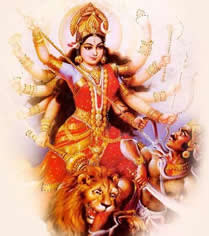
Hindu mythology has it that, Dashain is symbolic of the victory of the gods over the demons. Various Hindu epics explain the triumph of good over evil .The festival is symbolised by goddess Durga slaying the the most-dreaded demon - Mahisasur. The demon is guise as a fearful water buffalo. .
Most often, epics like the Ramayana tells one of the victory stories, where Lord Ram, believed to be an incarnation of Bishnu, after a long-drawn-out battle slaughtered Ravana, the king of demons. It is argued that Lord Ram was successful in the battle as he was blessed by goddess Durga. Thus, the Durga Puja. The first nine days signify the pitch battle fought between goddess Durga and the demon Mahisasur. The tenth day, Dashami, is the day when Mahisasur was slained. The day is marked as Bijaya Dashami, symbolising the triumph of good over evil.
The Dashain is celebrated by people of all hues and colour with great ecstasy, merriment, and lavish food and drinks
Tuesday, October 23, 2007
Dashain celebrated in Sikkim
GANGTOK, Oct. 22: Dashain, the longest and the most important festival of Nepali community, was celebrated amidst fun and gaiety across the state today. Today was the final day of the festival which is known as Tika, a day on which the elder ones give Tika to the younger ones and to other relatives who come for their blessings."It really gave me pleasure when my elders applied Tika on my forehead," said Mr Sanjay Gazmer, a local. A huge effigy of Ravana was burnt at Ranipool to observe the day. Crackers rent the air throughout the state as people celebrated the festival. Most of the shops remained closed here today following the festival

Saturday, October 20, 2007
Celebrating Dashain in Sikkim
Dashain
During the month of Kartik in the Bikram Sambat calendar (late September and early October), the Nepalese people indulge in the biggest festival of the year, Dashain. Dashain is the longest and the most auspicious festival in the Nepalese annual calendar, celebrated by Nepalese of all caste and creed throughout the country. The fifteen days of celebration occurs during the bright lunar fortnight ending on the day of the full moon. Thorough out the kingdom of Nepal the goddess Durga in all her manifestations are worshiped with innumerable pujas, abundant offerings and thousands of animal sacrifices for the ritual holy bathing, thus drenching the goddess for days in blood.
Dashain commemorates a great victory of the gods over the wicked demons. One of the victory stories told is the Ramayan, where the lord Ram after a big struggle slaughtered Ravana, the fiendish king of demons. It is said that lord Ram was successful in the battle only when goddess Durga was evoked. The main celebration glorifies the triumph of good over evil and is symbolized by goddess Durga slaying the terrible demon Mahisasur, who terrorised the earth in the guise of a brutal water buffalo. The first nine days signify the nine days of ferrous battle between goddess Durga and the demon Mahisasur. The tenth day is the day when Mahisasur was slain and the last five days symbolise the celebration of the victory with the blessing of the goddess. Dashain is celebrated with great rejoice, and goddess Durga is worshiped throughout the kingdom as the divine mother goddess.
In preparation for Dashain every home is cleansed and beautifully decorated, painted as an invitation to the mother goddess, so that she may visit and bless the house with good fortune. During this time the reunion of distant and nearby relatives occur in every household. The market is filled with shoppers seeking new clothing, gifts, luxuries and enormous supplies of temple offering for the gods, as well as foodstuffs for the family feasting. Thousands of sheep, goats, ducks, chicken and water buffalo are prepared for the great slaughter. All types of organisations are closed for ten to fifteen days. Labourers are almost impossible to find; from the poor to the rich, all enjoy the festive mood. Anywhere you go the aroma of 'Vijaya Dashami' is found.
 The first nine days of Dashain are called nawa ratri when tantric rites are conducted. In Nepal the life force is embodied in the divine energy and power of the female, depicted as goddess Durga in her many forms. All goddess who emanated from goddess Durga are known as devis, each with different aspects and powers. In most mother goddess temples the deity is represented simply as a sacred Kalash, carved water jug or multiple handed goddess holding murderous weapons. During these nine days people pay their homage to the goddess. If she is properly worshiped and pleased good fortunes are on the way and if angered through neglect then misfortunes are around the corner. Mother goddess is the source of life and everything.
The first day of Dashain is called Ghatasthapana, which literally means pot establishing. On this day the kalash, (holy water vessel) symbolising goddess Durga often with her image embossed on the side is placed in the prayer room. The kalash is filled with holy water and covered with cowdung on to which seeds are sown. A small rectangular sand block is made and the kalash is put in the centre. The surrounding bed of sand is also seeded with grains. The ghatasthapana ritual is performed at a certain auspicious moment determined by the astrologers. At that particular moment the priest intones a welcome, requesting goddess Durga to bless the vessel with her presence.
The room where the kalash is established is called 'Dashain Ghar'. Generally women are not allowed to enter the room where Dashain puja is being carried out. A priest or a household man worships the kalash everyday once in the morning and then in the evening. The kalash and the sand are sprinkled with holy water everyday and it is shielded from direct sunlight. By the tenth day, the seed will have grown to five or six inches long yellow grass. The sacred yellow grass is called 'Jamara'. It is bestowed by the elders atop the heads of those younger to them during the last five days when tika is put on. The jamara is taken as a token of Goddess Durga as well as the elders blessing.
As days passes by regular rituals are observed till the seventh day. The seventh day is called 'Fulpati'. On this day ,A parade is held in Gangtok and other towns. The fulpati, i.e. the procession bearing the jamara and other items necessary for the tika, is brought. Town area is filled with hundreds of nepali people meticulously attired in the traditional formal dress.
In fulpati, the kalash filled with holy water, banana stalks, jamara and sugar cane tied with red cloth is carried by Brahmans from the ancestral house on a decorated palanquin under a gold tipped and embroidered umbrella, led by priest. The government officials also join the fulpati parade. With this the Dashain feasting starts.
The eighth day is called the 'Maha Asthami'. The fervour of worship and sacrifice to Durga and Kali increases. On this day many orthodox Hindus will be fasting. Sacrifices are held in almost every house through out the day. The night of the eighth day is called 'Kal Ratri', the dark night. Hundreds of goats, sheep and buffaloes are sacrificed at the mother goddess temples. In the darkness of the night Durga temples. All over many nepali households in Sikkim hold sacrifices for the mother goddess. The sacrifice continues till dawn. While the puja is being carried out great feasts are held in the homes of common people where large amount of meat are consumed.
The ninth day is called 'Nawami'. Thousands of people go and pay their respect to the goddess day. Temples of mother goddess are filled with people from dawn till dusk. Animals mostly black goats are slaughtered by hundreds to honour Durga the goddess of victory and might and to seek her blessing. Military bands play war tunes, guns boom and officers with beautifully decorated medals in full uniform stand there. When the function ends the courtyard is filled ankle deep with blood. On this very day the god Vishwas Karma, the God of creativity is also worshiped. All factories, vehicles, any machinery instruments and anything from which we make a living are worshiped. We also give sacrifices to all moving machinery like cars, aeroplanes, trucks etc. to get the blessing from goddess Durga for protection for vehicles and their occupants against accidents during the year. The entire day is colourful.
The tenth day is the 'Dashami'. On this day we take tika and jamara from our elders and receive their blessing. We visit our elders in their home and get tika from them while our younger ones come to our home to receive blessing from us. The importance of Dasain also lies in the fact that on this day family members from far off and distant relatives come for a visit as well as to receive tika from the head of the family. This function continues for four days. After four days of rushing around and meeting your relatives Dashain ends on the full moon day, the fifteenth day. In the last day people stay at home and rest. The full moon day is also called 'Kojagrata' meaning 'who is awake'. The Hindu goddess of wealth Laxmi is worshipped. On this day the goddess Laxmi is given an invitation to visit each and everyone.
After Dashain the nation settles back to normal. After receiving the blessing of goddess Durga, people are ready to work and acquire virtue, power and wealth. Dashain thus is not only the longest festival but also the most anticipated one among all the festivals of Nepali people.
During the month of Kartik in the Bikram Sambat calendar (late September and early October), the Nepalese people indulge in the biggest festival of the year, Dashain. Dashain is the longest and the most auspicious festival in the Nepalese annual calendar, celebrated by Nepalese of all caste and creed throughout the country. The fifteen days of celebration occurs during the bright lunar fortnight ending on the day of the full moon. Thorough out the kingdom of Nepal the goddess Durga in all her manifestations are worshiped with innumerable pujas, abundant offerings and thousands of animal sacrifices for the ritual holy bathing, thus drenching the goddess for days in blood.
Dashain commemorates a great victory of the gods over the wicked demons. One of the victory stories told is the Ramayan, where the lord Ram after a big struggle slaughtered Ravana, the fiendish king of demons. It is said that lord Ram was successful in the battle only when goddess Durga was evoked. The main celebration glorifies the triumph of good over evil and is symbolized by goddess Durga slaying the terrible demon Mahisasur, who terrorised the earth in the guise of a brutal water buffalo. The first nine days signify the nine days of ferrous battle between goddess Durga and the demon Mahisasur. The tenth day is the day when Mahisasur was slain and the last five days symbolise the celebration of the victory with the blessing of the goddess. Dashain is celebrated with great rejoice, and goddess Durga is worshiped throughout the kingdom as the divine mother goddess.
In preparation for Dashain every home is cleansed and beautifully decorated, painted as an invitation to the mother goddess, so that she may visit and bless the house with good fortune. During this time the reunion of distant and nearby relatives occur in every household. The market is filled with shoppers seeking new clothing, gifts, luxuries and enormous supplies of temple offering for the gods, as well as foodstuffs for the family feasting. Thousands of sheep, goats, ducks, chicken and water buffalo are prepared for the great slaughter. All types of organisations are closed for ten to fifteen days. Labourers are almost impossible to find; from the poor to the rich, all enjoy the festive mood. Anywhere you go the aroma of 'Vijaya Dashami' is found.
 The first nine days of Dashain are called nawa ratri when tantric rites are conducted. In Nepal the life force is embodied in the divine energy and power of the female, depicted as goddess Durga in her many forms. All goddess who emanated from goddess Durga are known as devis, each with different aspects and powers. In most mother goddess temples the deity is represented simply as a sacred Kalash, carved water jug or multiple handed goddess holding murderous weapons. During these nine days people pay their homage to the goddess. If she is properly worshiped and pleased good fortunes are on the way and if angered through neglect then misfortunes are around the corner. Mother goddess is the source of life and everything.
The first day of Dashain is called Ghatasthapana, which literally means pot establishing. On this day the kalash, (holy water vessel) symbolising goddess Durga often with her image embossed on the side is placed in the prayer room. The kalash is filled with holy water and covered with cowdung on to which seeds are sown. A small rectangular sand block is made and the kalash is put in the centre. The surrounding bed of sand is also seeded with grains. The ghatasthapana ritual is performed at a certain auspicious moment determined by the astrologers. At that particular moment the priest intones a welcome, requesting goddess Durga to bless the vessel with her presence.
The room where the kalash is established is called 'Dashain Ghar'. Generally women are not allowed to enter the room where Dashain puja is being carried out. A priest or a household man worships the kalash everyday once in the morning and then in the evening. The kalash and the sand are sprinkled with holy water everyday and it is shielded from direct sunlight. By the tenth day, the seed will have grown to five or six inches long yellow grass. The sacred yellow grass is called 'Jamara'. It is bestowed by the elders atop the heads of those younger to them during the last five days when tika is put on. The jamara is taken as a token of Goddess Durga as well as the elders blessing.
As days passes by regular rituals are observed till the seventh day. The seventh day is called 'Fulpati'. On this day ,A parade is held in Gangtok and other towns. The fulpati, i.e. the procession bearing the jamara and other items necessary for the tika, is brought. Town area is filled with hundreds of nepali people meticulously attired in the traditional formal dress.
In fulpati, the kalash filled with holy water, banana stalks, jamara and sugar cane tied with red cloth is carried by Brahmans from the ancestral house on a decorated palanquin under a gold tipped and embroidered umbrella, led by priest. The government officials also join the fulpati parade. With this the Dashain feasting starts.
The eighth day is called the 'Maha Asthami'. The fervour of worship and sacrifice to Durga and Kali increases. On this day many orthodox Hindus will be fasting. Sacrifices are held in almost every house through out the day. The night of the eighth day is called 'Kal Ratri', the dark night. Hundreds of goats, sheep and buffaloes are sacrificed at the mother goddess temples. In the darkness of the night Durga temples. All over many nepali households in Sikkim hold sacrifices for the mother goddess. The sacrifice continues till dawn. While the puja is being carried out great feasts are held in the homes of common people where large amount of meat are consumed.
The ninth day is called 'Nawami'. Thousands of people go and pay their respect to the goddess day. Temples of mother goddess are filled with people from dawn till dusk. Animals mostly black goats are slaughtered by hundreds to honour Durga the goddess of victory and might and to seek her blessing. Military bands play war tunes, guns boom and officers with beautifully decorated medals in full uniform stand there. When the function ends the courtyard is filled ankle deep with blood. On this very day the god Vishwas Karma, the God of creativity is also worshiped. All factories, vehicles, any machinery instruments and anything from which we make a living are worshiped. We also give sacrifices to all moving machinery like cars, aeroplanes, trucks etc. to get the blessing from goddess Durga for protection for vehicles and their occupants against accidents during the year. The entire day is colourful.
The tenth day is the 'Dashami'. On this day we take tika and jamara from our elders and receive their blessing. We visit our elders in their home and get tika from them while our younger ones come to our home to receive blessing from us. The importance of Dasain also lies in the fact that on this day family members from far off and distant relatives come for a visit as well as to receive tika from the head of the family. This function continues for four days. After four days of rushing around and meeting your relatives Dashain ends on the full moon day, the fifteenth day. In the last day people stay at home and rest. The full moon day is also called 'Kojagrata' meaning 'who is awake'. The Hindu goddess of wealth Laxmi is worshipped. On this day the goddess Laxmi is given an invitation to visit each and everyone.
After Dashain the nation settles back to normal. After receiving the blessing of goddess Durga, people are ready to work and acquire virtue, power and wealth. Dashain thus is not only the longest festival but also the most anticipated one among all the festivals of Nepali people.
Wednesday, October 17, 2007
"Happy Dashain" Greetings from Sikkim Chief Minister

The Chief Minister, Dr. Pawan Chamling and Mrs. Tika Maya Chamling, have extended their greetings to the people of Sikkim on the auspicious occasion of Dashain festival which begins from October18 .
On the auspicious cccasion of BADA DASHAIN Sikkim Chief Minister Extended their's warmest Vijaya Greetings and season's felicitations to all the people of Sikkim. In their messages, they have wished the people of Sikkim a happy and joyful celebrations of festival and its true spirit.
Subscribe to:
Posts (Atom)